Wine has been a fixture at festive tables for centuries, and nearly every culture has folded it into its Christmas customs in its own way. A warm cup handed through a doorway, a bottle opened before dinner, a sparkling toast at midnight: these small rituals carry more meaning than the liquid alone. Artisan wine fits that role comfortably because it arrives with a place, a producer, and a story attached, and stories are what holiday tables tend to run on.
BACCO Fine Wine has spent more than 27 years supplying restaurants, wine shops, and event venues from its Atlanta base, and the holiday stretch is the part of the calendar when the portfolio matters most. What follows is a look at the customs that shape holiday drinking and the way artisan bottlings from the BACCO book slot into each one.
Why artisan wine belongs on the holiday table
Holiday meals are long. They move from appetizers to a main course to dessert, often with guests arriving at different hours and staying later than planned. A single bottle rarely covers that arc, which is why hosts and restaurant teams tend to build a spread instead of picking one label. Recommendations for holiday drinking often point people toward small artisan producers, and the reasoning is easy to follow: limited-production wines give a table character and give the host something to talk about when the cork comes out.
For a restaurant or venue, the same logic applies at a larger scale. A holiday list works best when it has range across price, color, and weight, so a table of six can find a bottle that suits the fish course, the roast, and the dessert without any of them feeling like an afterthought. Artisan producers make that easier because their ranges tend to be distinctive rather than interchangeable.
Warm cups and long nights: the mulled wine custom
Mulled wine is one of the oldest cold-weather wine customs in Europe, and the French version, Vin Chaud, sits alongside other special holiday wines in French tradition. The appeal is practical as much as ceremonial. Heat, citrus peel, and spice stretch a bottle across a crowd on a cold evening, and the smell fills a room in a way that no chilled pour can.
French holiday tables also make room for Prosecco and Franciacorta during the season, which says something useful about how these customs actually work. A tradition is rarely one drink. It is a set of options that a household or a venue rotates through as the month goes on. Artisan wine suits that rhythm because a good portfolio can supply the warm, spiced end of the evening and the bright, chilled end without the buyer having to source from several places.
Sparkling wine and the end-of-year toast
The end-of-year holidays seem to want to be celebrated with sparkling wine, and the tradition is strong enough that most hosts simply follow it. Champagne holds the ceremonial slot in many households, and sparkling wine shows up in European holiday customs again and again, from Prosecco to Franciacorta. The toast is the part everyone remembers, but the bottle often does more work than that, opening the evening and carrying through the appetizers.
For venues, sparkling wine is also the most reliable by-the-glass holiday pour. It signals celebration before anyone has read the menu, works with salty and fried appetizers, and gives event planners a natural signature serve for receptions and late-night parties.

Christmas Eve and the Feast of the Seven Fishes
The Feast of the Seven Fishes is a traditional Italian celebration held on Christmas Eve, and the meal is believed to have originated in Southern Italy. It is a long run of seafood courses, which makes it a different kind of wine problem than a roast dinner. Instead of one anchoring red, the table needs freshness and lift across several small plates, with enough variety to keep the seventh course from tasting like the second.
That structure rewards planning. A venue serving a fixed Christmas Eve menu can build a short pairing track rather than leaving guests to guess, and a wine shop can group its holiday display around the same idea. Artisan producers help here because their wines tend to be made in smaller lots, which means a list built on them can change from year to year without the whole program feeling unfamiliar.
Sweet wine with panettone and pandoro
Christmas desserts are an essential component of any holiday celebration, and Italian tables lean on panettone and pandoro at the end of the meal. A sweet wine or a passito is an excellent choice to accompany both, and it solves the practical problem that most holiday hosts run into: everyone is full, but nobody wants the evening to end. A small pour of something sweet extends the table by another half hour.
This is one of the quietest ways artisan wine earns its place in a holiday tradition. The dessert wine is rarely the bottle people talk about on the night, but it is the one they remember when they plan the following year.
Wine as a gift, and wine as a gesture
Gifting is where holiday wine does double duty. Holiday wine advice routinely covers what to bring to a party and which bottle makes the right impression on a host, a client, or a boss, and the answers usually point in the same direction: something with a story, not something pulled at random from a shelf. Christmas wine gifts work when the bottle says something about the giver, which is exactly the strength of an artisan portfolio.
For shops, that means gift merchandising matters as much as the wine itself. Grouping bottles by occasion, such as a sparkling opener, a bottle for the fish course, and a sweet wine for the panettone, gives shoppers a reason to buy three instead of one. For venues, a well-chosen bottle handed to a regular at the end of the year does more for the relationship than a generic card.
Where the BACCO Fine Wine portfolio fits
BACCO Fine Wine imports and distributes premium domestic and international wines, and the portfolio includes producers such as Vinchio Vaglio, Dr. Frank's, and Altos de San Esteban. The practical value of that mix during the holidays is range. A restaurant or shop can assemble a seasonal list that opens with sparkling wine, moves through a white built for the Christmas Eve table, lands on a red for the roast, and finishes with something sweet alongside the panettone.
There is a second advantage that matters most to trade buyers. Wines from named artisan producers come with a story that can be printed on a menu or written on a shelf tag, and during the weeks when customers are buying gifts and asking for recommendations, that story is what closes the sale. A guest who knows why a bottle was chosen is far more likely to take one home.
Building a holiday wine list for restaurants, shops, and event venues
By the time December arrives, most of the buying decisions have already been made, or should have been. The holiday calendar leaves little room for an unfamiliar bottle that sits unsold through the busiest weeks of the year, and the cost of a wrong guess is highest exactly when the stakes are highest.
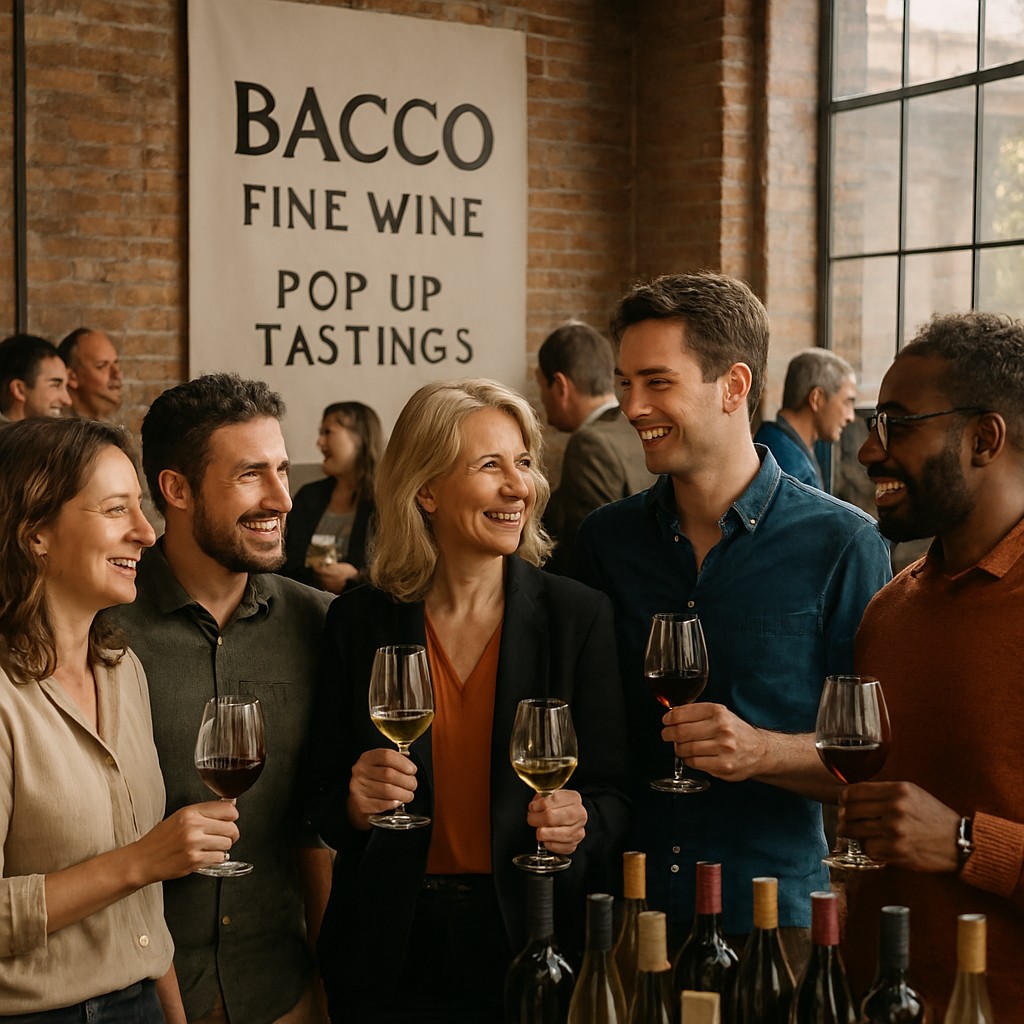
BACCO's risk-free pop-up tasting program is built for that problem. Venues can sample new wines before committing to inventory, which means a restaurant can test a by-the-glass pour on real guests, a shop can trial a gift set before ordering deep, and an event venue can confirm a reception pour before it goes on a contract. For teams planning a Christmas Eve menu, a New Year's Eve party, or a gift display, tasting first turns a guess into a decision.

Keeping the custom and adding a little discovery
Every tradition described here started as a household habit before it became a tradition. A warm cup on a cold night, fish on Christmas Eve, panettone with something sweet, sparkling wine at midnight. None of them require a specific label, which is why there is room in each one for a bottle nobody at the table has tried before. That is the role artisan wine plays in the holidays. It keeps the custom intact and gives it something new to say, and it gives the host, the chef, or the shop owner a reason to tell a story along with the pour.
For venues and buyers planning the season now, the most useful step is to taste with enough lead time to build a list around what actually works. BACCO Fine Wine's team works with restaurants, wine shops, and event venues throughout the year, and the pop-up tasting format keeps the process low risk and low commitment while the calendar is still open.
Frequently Asked Questions
What wine should I bring to a holiday party?
Holiday wine advice usually points toward something versatile and easy to open, such as a sparkling wine for the arrival toast or a bottle that pairs with a wide range of appetizers. An artisan bottle with a clear producer story also makes a better gift than a familiar label, because the host has something to say about it when it is poured.
Is sweet wine a good match for Christmas desserts?
Yes. Christmas desserts are an essential part of the celebration, and a sweet wine or a passito is an excellent choice to accompany panettone and pandoro. The sweetness lines up with the dried fruit and candied peel rather than fighting it, and a small pour is usually enough to close out a long holiday meal.
What is Vin Chaud and why is it served during the holidays?
Vin Chaud is the French version of mulled wine, served warm with spice and citrus through the winter months. French holiday tradition also includes special wines such as Prosecco and Franciacorta alongside it. The warm serve suits cold evenings and crowds, since one bottle can be stretched across several guests without losing its character.
Why is sparkling wine served at New Year's Eve?
The end-of-year holidays seem to want to be celebrated with sparkling wine, and the tradition is well established across Europe and beyond. Champagne, Prosecco, and Franciacorta all appear in holiday customs. The practical reason is that sparkling wine signals a celebration the moment it is opened, which makes it an easy choice for a midnight toast.
How can a restaurant or venue taste BACCO wines before ordering?
BACCO Fine Wine runs a risk-free pop-up tasting program that lets venues sample new wines before committing to inventory. It is designed for restaurants, wine shops, and event venues that want to test a pour, a gift set, or a holiday list on real guests first. Buyers can request a tasting through the BACCO Fine Wine website.